Complete Class 9 Life Science (Biology) Q&A from the new NCERT Science Exploration 2026-27 book — Cell, Tissues, Reproduction & Diversity, chapter-wise.
Class 9 Life Science Question and Answer: Complete Guide to the New NCERT Science Exploration (2026–27) Biology Chapters
CBSE’s new Science Exploration textbook for Class 9 (2026–27 session) restructured the biology syllabus significantly. If you’ve been searching for “Class 9 Life Science question and answer” and you’re on the new edition, some of the older answer keys floating around online won’t match your book — “Why Do We Fall Ill,” “Natural Resources,” and “Improvement in Food Resources” are no longer standalone Class 9 chapters, and Reproduction has moved down from Class 10 into Class 9 for the first time.
This guide covers the four biology chapters that make up Life Science in the new book, with thorough, original question-and-answer coverage for each one, organised so you can revise concept-by-concept.
Confirm You’re on the Right Edition First
Before you use any answer key, check your textbook’s opening line:
- If Chapter 1 is titled “Exploration: Entering the World of Secondary Science” → you’re on the new 2026–27 edition. Use this guide.
- If Chapter 1 is titled “Matter in Our Surroundings” → you’re on the older edition, and you’ll need the older six-chapter biology breakdown instead (Cell, Tissues, Diversity, Why Do We Fall Ill, Natural Resources, Food Resources).
The New Biology Chapter Map
| Chapter No. | Chapter Title | Core Focus |
|---|---|---|
| 2 | Cell: The Building Block of Life | Cell structure, organelles, cell division, cancer link |
| 3 | Tissues in Action | Plant and animal tissues, musculoskeletal system |
| 11 | Reproduction: How Life Continues | Modes of reproduction, human reproductive basics |
| 12 | Patterns in Life: Diversity and Classification | Biodiversity, five-kingdom classification, taxonomy |
Biology chapters are placed at both the start (Ch. 2–3) and the later part (Ch. 11–12) of the integrated book, so don’t assume all your Life Science content is grouped together — plan your revision schedule around the chapter numbers above.
Chapter 2: Cell — The Building Block of Life
Q1. Why is the cell considered the basic unit of life? Every living organism is built from one or more cells, and each cell independently carries out essential functions like nutrition, respiration, and waste removal — making it both the structural and functional foundation of all life.
Q2. What distinguishes a prokaryotic cell from a eukaryotic cell? A prokaryotic cell lacks a well-defined nucleus and membrane-bound organelles — its genetic material lies freely in the cytoplasm. A eukaryotic cell has a true nucleus enclosed by a nuclear membrane, along with distinct membrane-bound organelles like mitochondria and the endoplasmic reticulum.
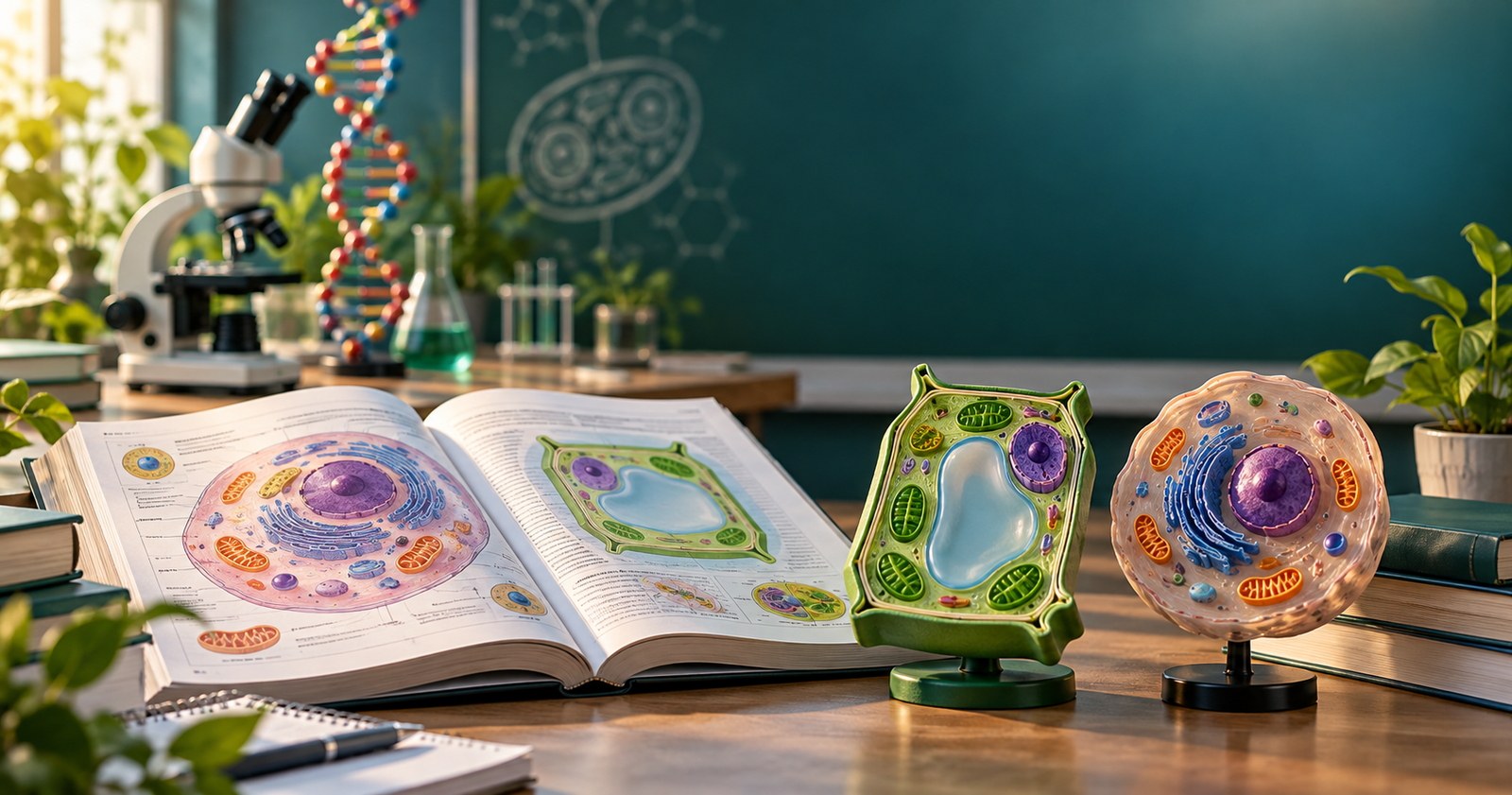
Q3. How does a plant cell differ structurally from an animal cell? Plant cells have a rigid cellulose cell wall, a large central vacuole, and chloroplasts for photosynthesis. Animal cells lack a cell wall and chloroplasts, and typically have smaller, multiple vacuoles instead of one large one.
Q4. What is the role of the cell membrane, and how does it control movement of substances? The cell membrane is selectively permeable, meaning it allows only certain substances to pass through while blocking others. This regulation happens through processes like diffusion and osmosis, helping the cell maintain a stable internal environment.
Q5. Explain the function of mitochondria and why they’re called the “powerhouse of the cell.” Mitochondria break down glucose in the presence of oxygen to release usable energy in the form of ATP. Since nearly every cellular activity depends on this energy supply, mitochondria are described as the cell’s powerhouse.
Q6. What is the difference between mitosis and meiosis? Mitosis produces two genetically identical daughter cells from one parent cell and is used for growth and repair. Meiosis produces four genetically distinct daughter cells with half the chromosome number, and is specifically involved in the formation of reproductive cells (gametes).
Q7. How is uncontrolled cell division linked to cancer? Normally, cell division is tightly regulated by internal checkpoints. When these regulatory mechanisms fail, cells can divide uncontrollably and form abnormal growths — this uncontrolled, invasive cell division is the underlying basis of cancer.
Q8. What is the function of the Golgi apparatus? The Golgi apparatus modifies, packages, and dispatches proteins and other materials produced within the cell, directing them to their correct destination inside or outside the cell — much like a cellular packaging and shipping center.
Chapter 3: Tissues in Action
Q1. What is a tissue, and why is division of labour important in multicellular organisms? A tissue is a cluster of similar cells organised to perform a specific function together. Division of labour allows different tissues to specialise — some for movement, some for support, some for communication — making the whole organism function far more efficiently than if every cell performed every task.
Q2. Differentiate between meristematic and permanent tissue in plants. Meristematic tissue is made of actively dividing, undifferentiated cells located at growing points like root and shoot tips, driving plant growth. Permanent tissue consists of cells that have stopped dividing and matured into a fixed shape suited to a specific function, such as transporting water (xylem) or food (phloem).
Q3. List the four types of animal tissue with one distinguishing feature of each.
- Epithelial tissue — forms tightly packed protective layers (e.g., skin, gut lining)
- Connective tissue — binds and supports structures, often with cells spread in a matrix (e.g., bone, cartilage, blood)
- Muscular tissue — composed of contractile fibers enabling movement (e.g., skeletal, smooth, cardiac muscle)
- Nervous tissue — made of neurons specialised for transmitting electrical impulses
Q4. What is the musculoskeletal system, and how do muscles and bones work together? The musculoskeletal system is the combined framework of bones, joints, and muscles that supports the body and enables movement. Muscles contract and relax, pulling on bones connected via joints, which produces controlled movement at specific points in the body.
Q5. What are the main types of joints, and how do they differ in movement? Joints vary by the range of motion they allow — hinge joints (like the elbow) permit movement in one plane, ball-and-socket joints (like the shoulder) allow movement in multiple directions, and fixed/fibrous joints (like skull sutures) allow no movement at all.
Q6. Why does nutrition and exercise matter for musculoskeletal health? Adequate protein and calcium intake supports muscle repair and bone density, while regular exercise strengthens muscles and improves joint flexibility — together, they reduce the risk of musculoskeletal problems like weak bones or muscle degeneration over time.
Q7. How does connective tissue like blood differ from typical tissue structure? Unlike most tissues where cells are tightly packed, blood is a fluid connective tissue where cells (red blood cells, white blood cells, platelets) are suspended in a liquid matrix called plasma, allowing it to flow and transport substances throughout the body.
Chapter 11: Reproduction — How Life Continues
Q1. Why is reproduction essential for the continuation of life, even though it isn’t necessary for an individual organism’s survival? While an individual organism can survive without reproducing, a species survives across generations only through reproduction. It ensures genetic continuity and allows populations to persist beyond the lifespan of any single organism.
Q2. What is the difference between asexual and sexual reproduction? Asexual reproduction involves a single parent producing offspring that are genetically identical to it, without the fusion of gametes (e.g., budding in yeast, binary fission in bacteria). Sexual reproduction involves the fusion of male and female gametes from two parents, producing genetically varied offspring.
Q3. Name and briefly explain two common methods of asexual reproduction.
- Binary fission — a single-celled organism divides into two roughly equal daughter cells, seen in bacteria and amoeba.
- Budding — a small outgrowth (bud) forms on the parent organism and eventually detaches as a new individual, seen in yeast and hydra.
Q4. Why does sexual reproduction produce more genetic variation than asexual reproduction? Sexual reproduction combines genetic material from two different parents during fertilisation, creating new combinations of traits in the offspring. This variation increases a population’s ability to adapt to changing environments over time, unlike asexual reproduction, which produces genetically identical clones.
Q5. What is fertilisation, and where does it typically occur in humans? Fertilisation is the fusion of a male gamete (sperm) and a female gamete (egg/ovum) to form a zygote, which then develops into a new individual. In humans, fertilisation typically occurs inside the female reproductive tract, in the fallopian tube.
Q6. What role do hormones play in human reproduction? Hormones regulate the development and function of reproductive organs and control processes like the menstrual cycle in females and sperm production in males, coordinating the timing of reproductive readiness and fertility.
Q7. Why is adolescence considered an important stage in relation to reproduction? Adolescence marks the onset of puberty, during which reproductive organs mature and become functional due to hormonal changes, making an individual capable of sexual reproduction for the first time.
Chapter 12: Patterns in Life — Diversity and Classification
Q1. What is biodiversity, and why does it matter? Biodiversity refers to the enormous variety of living organisms found across different habitats on Earth — from microscopic bacteria to large mammals. It matters because it maintains ecological balance, supports food chains, and provides humans with resources like food, medicine, and raw materials.
Q2. What is a biodiversity hotspot? Name one example from India. A biodiversity hotspot is a region with an unusually high number of species — including many found nowhere else (endemic species) — that is also under significant threat from habitat loss. The Western Ghats in India is a well-known example.
Q3. What are endemic species? Give an example. Endemic species are organisms found naturally only in one specific geographic region and nowhere else in the world. The Nilgiri tahr, found in the Western Ghats of India, is a commonly cited example.
Q4. On what basis are organisms classified? Organisms are classified based on shared characteristics such as cell structure (presence or absence of a nucleus), mode of nutrition, body organisation, and reproductive methods — grouping similar organisms together to make them easier to study.
Q5. Explain the five-kingdom classification system and who proposed it. Proposed by R. H. Whittaker, the five-kingdom system groups all organisms into Monera (bacteria, lacking a true nucleus), Protista (single-celled eukaryotes), Fungi (decomposers with chitin cell walls), Plantae (multicellular, photosynthetic organisms), and Animalia (multicellular, heterotrophic organisms).
Q6. What is the difference between a vertebrate and an invertebrate? Vertebrates possess an internal skeleton that includes a backbone (vertebral column), providing structural support and protection for the spinal cord. Invertebrates lack this internal bony skeleton and instead rely on alternative support structures such as an exoskeleton or a fluid-filled body cavity.
Q7. Name the major groups of vertebrates with one key feature of each.
- Fish — live in water, breathe through gills, cold-blooded
- Amphibians — live on both land and water, moist skin, cold-blooded
- Reptiles — scaly skin, lay eggs on land, cold-blooded
- Birds — feathers, hollow bones, warm-blooded
- Mammals — hair/fur, warm-blooded, produce milk for young
Q8. What is binomial nomenclature, and who introduced it? Binomial nomenclature is a standardised naming system that gives every species a unique two-part scientific name — the genus followed by the species — allowing scientists worldwide to refer to the same organism unambiguously. It was introduced by Carolus Linnaeus in the 18th century.
Q9. How does classification help in practical fields like agriculture? Classification helps identify which plant and animal groups are more resistant to disease, better suited to specific climates, or higher-yielding, allowing farmers and researchers to make informed choices about crop and livestock selection based on well-understood group characteristics.
How to Use This Guide for Maximum Marks
- Match your revision to the correct edition — using answers from the old syllabus for the new Reproduction or Patterns in Life chapters will cost you marks, since the emphasis and terminology have changed.
- Practice diagrams for Cell and Tissues — CBSE continues to expect labelled diagrams alongside written explanations for these two chapters specifically.
- Build comparison tables for concept pairs like mitosis/meiosis, asexual/sexual reproduction, and vertebrate/invertebrate — these “difference between” answers are consistently tested.
- Connect Reproduction and Cell chapters — meiosis (Chapter 2) directly explains how gametes form for sexual reproduction (Chapter 11), so revising them together reinforces both.
Common Mistakes to Avoid
- Relying on old-syllabus answer keys for Reproduction and Diversity, since question emphasis has shifted under the new curriculum.
- Confusing mitosis and meiosis — remember mitosis is for growth/repair, meiosis is specifically for gamete formation.
- Giving vague definitions of biodiversity without mentioning specific examples like endemic species or hotspots, which examiners often expect.
- Mixing up joint types in the musculoskeletal section — always link the joint name to its specific range of motion.
Quick FAQ
Has “Why Do We Fall Ill” been completely removed from Class 9? Yes, it’s no longer a standalone chapter in the new 2026–27 Science Exploration book. Health and disease concepts may reappear in a different integrated form later in the curriculum, but there’s no dedicated chapter for it in the current Class 9 book.
Why was Reproduction moved from Class 10 to Class 9? Under the NEP 2020 and NCF-SE 2023 curriculum redesign, reproduction concepts were shifted a year earlier to build foundational biology knowledge sooner — which is particularly useful for students later preparing for competitive exams like NEET.
Is Diversity in Living Organisms the same as the new “Patterns in Life” chapter? Conceptually yes — both cover classification and the five-kingdom system — but the new chapter also adds a stronger emphasis on biodiversity, endemic species, and biodiversity hotspots, which weren’t as prominent in the older version.
Do I need to study Earth as a System (Chapter 13) as part of Life Science? No — Earth as a System is a new Earth Science chapter, separate from Biology, even though it’s part of the same integrated Science Exploration textbook.
Final Word
The new NCERT Science Exploration book reorganised Class 9 Life Science around four focused chapters — Cell, Tissues, Reproduction, and Patterns in Life — each building conceptually on the last. Use the questions above to test your understanding chapter-by-chapter, practice the diagrams your exams will expect, and make sure you’re studying from material that actually matches your current edition. That alignment alone will save you from wasted revision time and get you exam-ready faster.